
Iran team chief slams Infantino as US visas spark World Cup crisis
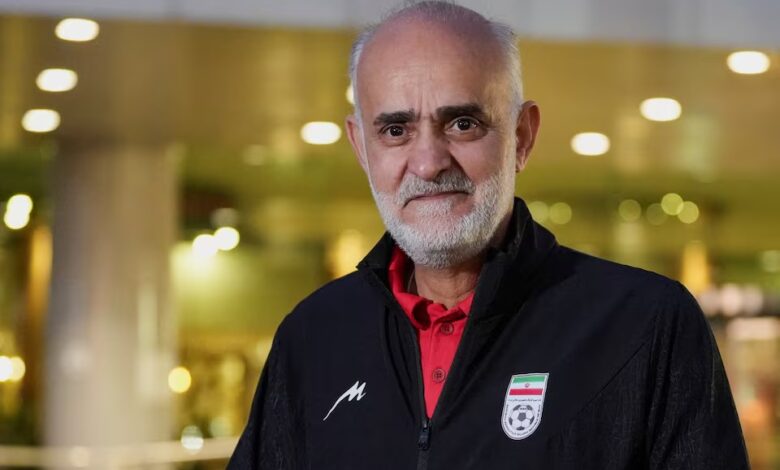
By Nawaz Gohar ; The meticulously curated, “feel-good” marketing of the 2026 World Cup collided violently with grim geopolitical reality on Thursday. Speaking exclusively from the team’s forced sanctuary outside the Marriott Hotel in Tijuana, Iranian team supervisor Mahdi Mohammad Nabi launched a scathing attack on FIFA President Gianni Infantino, accusing the governing body of failing to honor explicit promises regarding full tournament access.
The controversy unfolds against an unprecedented and highly combustible backdrop. This is the first World Cup since its inception in 1930 where a host nation is actively set to receive a country with which it is technically at war. Though a fragile April ceasefire paused direct military strikes between Washington and Tehran, the bitter enmity has spilled directly onto the pitch.
Nabi—a seasoned tournament diplomat who managed squad operations at both the 2018 and 2022 World Cups—is the highest-profile casualty of a sweeping diplomatic blockade. He is one of 15 Iranian soccer federation members systematically denied entry visas by the United States.
The lockout stands in stark, unflattering contrast to a freewheeling press conference delivered by Infantino just a day prior in Mexico City. The FIFA chief had triumphantly pointed to Iran’s participation as proof that football could seamlessly rise above global conflict.
“We hope Mr. Infantino will indeed implement the words and promises he made to the Iranian national team,” Nabi told Reuters, his tone measured but laced with profound frustration. “FIFA regulations and protocols must be properly followed by both member federations and hosts. I have never before experienced such a total lack of coordination.”
When pressed on a scathing U.S. State Department justification—which explicitly alleged that Washington would not allow Tehran to “abuse this system to sneak terrorists into the U.S. under false pretenses”—Nabi fiercely pivoted back to the game. “We are here to talk about sports; we did not come to engage in any political activities.”
The logistical fallout has completely disrupted Iran’s tournament preparation. Barred from their planned training facilities in Arizona, the squad was forced into a last-minute scramble to set up camp in Tijuana, just south of the Mexican border. While the players themselves were finally granted U.S. visas a mere 10 days before their Monday opener against New Zealand outside Los Angeles, the damage to their preparation was already done.
The strict American border policy has cast a long, polarizing shadow over this historic 48-team tournament. Beyond the Iranian federation, Washington has denied entry to numerous African journalists, implemented aggressive financial bond measures for nations flagged for visa overstays, and enforced strict travel bans against four qualified nations. Earlier this week, Somalian FIFA referee Omar Abdulkadir Artan was abruptly turned away at the border despite holding a valid visa, with U.S. officials citing alleged ties to extremist organizations.
When confronted with these escalating operational failures, Infantino offered a remarkably detached defense, claiming FIFA cannot override sovereign immigration laws. “We don’t control everything,” Infantino remarked dismissively. “Maybe it’s good to just chill, relax.”
But “chilling” is a luxury the Iranian players cannot afford. Midfielder Saeid Ezatolahi opened up about the emotional and psychological toll the surrounding chaos has taken on a squad entirely isolated from their loved ones.
“We need all of our staff, and especially our main guys who can guide us through this tournament,” Ezatolahi admitted, noting that the team has accepted that their families cannot cross the border to support them. Yet, despite the psychological weight of a distant war and a disrupted camp, the midfielder insisted their focus remains unbroken.
“We are taking this opportunity and we have to step up,” Ezatolahi said softly. “We have to fight for what we call love. And for us, that love is football.”