
A House of Cards: The impending collapse of Pakistan women’s cricket
Exclusive Opinion Article by Nawaz Gohar on Pakistan Women Cricket

A House of Cards: The impending collapse of Pakistan women’s cricket
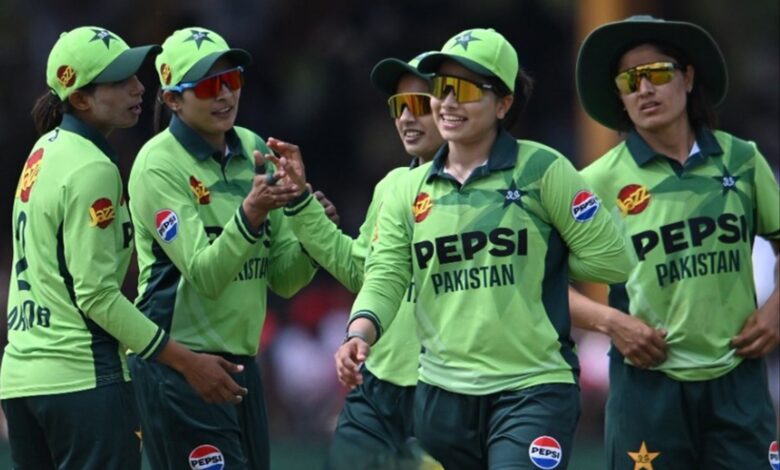
By Nawaz Gohar ; The ongoing series in South Africa is not just a display of poor cricket; it is a mirror reflecting the decaying state of the women’s game in Pakistan.
As the national side stares down the barrel of a potential whitewash following consecutive defeats, the narrative remains agonizingly familiar: a lack of intent, a refusal to modernize, and a stubborn reliance on “old guns” who have long since fired their last meaningful shots.
The first ODI at Bloemfontein was a microcosm of this failure. Despite a rain-shortened 41-over format that demanded urgency, Pakistan’s response was a mix of individual milestones and collective capitulation.
While Sidra Amin and Ayesha Zafar’s record 126-run partnership for the third wicket looked impressive on the scorecard, eclipsing the previous 124-run stand by Sadaf Shamas and Bismah Maroof, it was ultimately a hollow achievement. In a chase of 261 (DLS adjusted), batting milestones are worthless if they aren’t backed by the finishing power required to cross the line.
The real reason behind this downward spiral is the Pakistan Cricket Board’s (PCB) persistent failure to enforce a merit-based transition. We are witnessing a “Sinking Ship” scenario where the same faces are selected tour after tour, regardless of their diminishing returns in high-pressure ICC events.
The domestic circuit is brimming with young, hungry, and genuine talent, girls who possess the modern power-hitting skills that the international game now demands. Yet, these promising prospects are sidelined in favor of an aging core that has become comfortable with losing.
If the PCB continues to shield “useless guns” rather than blooding fresh talent, Pakistan will remain a Tier-2 team, capable of beating minnows but destined to be humiliated by the likes of Australia, England, and South Africa.
The first ODI perfectly illustrated the tactical bankruptcy of the current setup. After Diana Baig and Nashra Sundhu (2-45) did the hard work of reduced the Proteas to 170-6, the Pakistani bowlers allowed an unbeaten 90-run partnership for the seventh wicket. Sune Luus (93*) and Sinalo Jafta (57*) were treated like world-beaters because our bowlers lacked the killer instinct to wrap up the tail.
When it was Pakistan’s turn to bat, the lack of depth was glaring. Once the partnership between Ayesha Zafar (81) and Sidra Amin (68) was broken by Luus, the middle order folded like a deck of chairs. Aliya Riaz’s 32 off 26 was a solitary spark in a dark room, as the team was bundled out for 223 in 38.5 overs, falling 37 runs short with over two overs still left unplayed.
The “experience” card has been overplayed. Experience is only valuable if it translates into winning matches; in Pakistan’s case, it has become a shield for stagnation. The real issues that need rectification are:
The Power Gap: While global cricket has moved toward a 300+ run standard, Pakistan’s veterans still struggle to clear the 220-run mark.
The Replacement Policy: It is time to thank the seniors for their service and hand the reins to the U-19 and emerging stars who aren’t burdened by the “fear of losing.”
Institutional Accountability: The selection committee must be held responsible for the lack of bench strength.
If we do not overhaul the system now, the shameful defeats in South Africa will become the permanent legacy of Pakistan women’s cricket. The ship is sinking, and only a radical injection of young, genuine talent can plug the holes. It is time to stop playing for records and start playing for results.