Pakistan’s Sporting Decline: Where Are We Heading, and Who Is Accountable?
I was compelled to pause and reflect on a troubling question: what exactly is happening to sports in Pakistan?

Pakistan’s Sporting Decline: Where Are We Heading, and Who Is Accountable?
I was compelled to pause and reflect on a troubling question:
what exactly is happening to sports in Pakistan?
Before me were the names, ages, results and administrative details of Pakistan’s contingent at the Asian Games. Every page raised another question. Had we travelled there to compete, to gain experience, or merely to register our presence under the national flag? What preparation lay behind a contingent of nearly 250 people, and who was accountable for the outcome?
My attention turned to Aisam-ul-Haq Qureshi. At 46, he was not only the President of the Pakistan Tennis Federation but also a member of the national team. His past achievements deserve respect, but the question of transparency in federation elections and leadership becomes even more relevant when the federation’s president is also competing as an athlete. His early defeat in mixed doubles was not the real issue. The bigger question was what the federation had done to prepare the next generation of Pakistani tennis players.
Aqeel Khan, also 46, was another name on the list. His services to Pakistani tennis cannot be denied, but how long will our national sports continue to revolve around familiar names? Where is the generation that should have emerged to take their place?
Then came the name of Noshin Aslam, 55, who represented Pakistan in table tennis. The Pakistani women’s team lost all its group matches and was eliminated. The concern here is not an individual athlete’s effort but the responsibility of the federation tasked with developing new talent. What selection trials were conducted? How many young women participated, and what were their results? Such information should be publicly available rather than locked away in administrative files.
In triathlon, which combines swimming, cycling and running, Sana Arif, reported in media accounts to be 41, represented Pakistan. The Pakistani mixed relay team failed to complete the race. Reports of serious difficulties during the swimming leg, including concerns about the risk of drowning, warrant proper verification and investigation. Who assessed the athletes’ open-water swimming capabilities? How much race-specific training had they completed? Were adequate safety measures and emergency arrangements in place?
The larger question concerns the size and composition of the contingent. Reports indicated that 246 people were sent, including 234 athletes and relevant officials. Of these, 93 reportedly received government support, while 141 participated on a self-financed basis. These figures demand a transparent and documented account. Who approved the participation? What responsibilities did the officials perform? What performance targets were set for the athletes? How much was spent on travel, accommodation and allowances?
At major Asian competitions, the standards required to win medals are well established. Our federations should know the level of competition in each event, the performances of likely medal contenders and where Pakistani athletes stand in comparison. Where a significant gap existed, what plan was in place to close it? Simply increasing the size of a contingent does not increase the likelihood of winning medals.
Reports concerning the non-availability of tracksuits and shoes made the situation even more disappointing. Allegations that clothing did not arrive on time and that athletes were asked to pay Rs 35,000 for a tracksuit require investigation. Procurement costs, receipts and distribution records should be made public. If these allegations are substantiated, those responsible must answer for failing to provide basic sporting equipment despite the extensive arrangements made for the contingent.
Noreen Hussain failed to register a valid mark in pole vault, while Arshad Nadeem finished fourth. Defeat is part of sport, but learning from every result is an administrative responsibility. Arshad’s fitness should be assessed through medical evaluations, training records and professional performance analysis, not speculation or ridicule based on his physical appearance. Even an Olympic champion needs consistent coaching, scientific training and high-quality support to remain competitive.
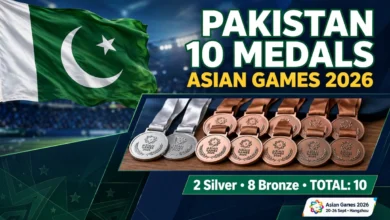
Pakistan won two silver and eight bronze medals, but no gold. The efforts of those who secured these ten medals deserve recognition, yet appreciation must not prevent us from asking difficult questions about the overall preparation of the contingent. India finished fourth with 85 medals, including 21 gold. Differences in resources are real, but what were Pakistan’s own targets? In which disciplines did we realistically expect medals, and what preparation was undertaken to achieve them?
These questions become particularly important when we look at the state of Pakistan hockey, a sport that once placed our country among the finest in the world.
Pakistan’s hockey legacy is a source of immense pride. Our Olympic gold medals, World Cup triumphs and international achievements established a reputation that few nations could match. Yet today, we are too often left looking back at our glorious past rather than building a credible future.
There have been encouraging signs, and every achievement by our players deserves recognition. But occasional victories and isolated successes cannot be mistaken for a complete revival. *Pakistan hockey still has a great deal of work to do before it can consistently compete with the world’s leading teams.*
Where is the sustained domestic competition needed to keep players match-fit throughout the year? Where are the structured development pathways for under-16, under-18 and under-21 players? How many talented youngsters are being identified and groomed at grassroots level? Are our academies, clubs, departments and provincial structures working within a coordinated national framework?
We cannot expect our national team to deliver at major international tournaments if preparations begin only shortly before competition. Players need year-round training, regular international exposure, qualified coaches, modern fitness and conditioning programmes, sports science, physiotherapy and proper recovery facilities. Goalkeepers, penalty-corner specialists and tactical units need dedicated attention. Selection must be transparent, merit-based and supported by measurable performance data.
Equally important is the financial and administrative stability of the sport. Players should not have to worry about basic facilities, outstanding dues, travel arrangements or uncertainty over international participation. The Pakistan Hockey Federation must establish clear development priorities, publish selection criteria, organise regular competitions and assess performance against measurable targets.
The experience of our former Olympians and the potential of our academies are valuable national assets. However, their knowledge must be translated into a practical development strategy. The Pakistan Hockey Federation, Pakistan Sports Board, provincial sports departments, educational institutions, departmental teams, clubs and private sponsors must work together. No single institution can reverse years of decline without sustained cooperation.
Above all, young players need a clear pathway from school hockey to academies, age-group teams and ultimately the senior national side. They need regular competition, professional coaching and fair opportunities for selection. We cannot expect a new generation to restore Pakistan hockey’s former glory without giving it the facilities, resources and support required to succeed.
Our hockey history gives us every reason to believe in our potential, but history alone cannot win future tournaments. *The revival of Pakistan hockey requires consistent investment, professional management, grassroots development and accountability—not merely celebrations of past achievements.*
The same principle applies to every sport in Pakistan. Every federation should be able to demonstrate how many young athletes it has developed, how many meaningful competitions it has organised and what results it has achieved with the resources entrusted to it. Administrative positions carry responsibilities, not merely privileges.
Following the 18th Constitutional Amendment, the federal sports ministry was abolished, but the Pakistan Sports Board continues to operate under the Ministry of Inter-Provincial Coordination. The federal government, provincial authorities, Pakistan Olympic Association and individual federations must therefore answer for their respective responsibilities. Dividing responsibility must never become an excuse for avoiding it.
Pakistan’s young athletes are asking for playing fields, qualified coaches, consistent training and opportunities to compete. They deserve a structured development pathway, not years of waiting. Whether in hockey, athletics, tennis, swimming or any other sport, talent must be identified early and supported through a clear, long-term plan.
I appeal to Prime Minister Shehbaz Sharif to commission an independent review of selection procedures, expenditure, athlete safety, procurement and equipment distribution. The findings should be made public, and proven negligence should lead to appropriate action.
At the same time, preparations for the 2030 Asian Games must begin without delay. Transparent trials, sustained training programmes, regular international competition and annual performance targets should be established. Hockey, in particular, needs a comprehensive revival plan that invests in grassroots development while preparing the senior team for international competition.
If the next four years are once again lost to explanations, blame-shifting and administrative disputes, we will find ourselves asking the same questions at the next major sporting event.
Our athletes deserve better. Our young people deserve better. And Pakistan’s sporting heritage, particularly its proud hockey tradition, deserves far more than ceremonial recognition and memories of past glory.
The real question is not whether Pakistan possesses sporting talent. It is whether those entrusted with that talent are prepared to provide the leadership, resources and accountability needed to turn potential into performance.