Pollution crisis hits India Open: World No. 3 withdraws over hazardous air quality in New Delhi

Pollution crisis hits India Open: World No. 3 withdraws over hazardous air quality in New Delhi
By Nawaz Gohar ; The international sporting community has been sent a stark warning regarding environmental safety as World No. 3 badminton star Anders Antonsen announced his withdrawal from the India Open, citing the “extremely poor” air quality in the Indian capital.
The decision by the Danish ace has reignited a fierce global debate regarding the suitability of New Delhi as a host for elite-level athletic competitions during periods of severe smog.
Taking to social media to explain his absence, Antonsen revealed that his decision was rooted in health concerns. He expressed that playing at peak physical intensity in New Delhi’s current environment posed an unacceptable risk to his well-being.
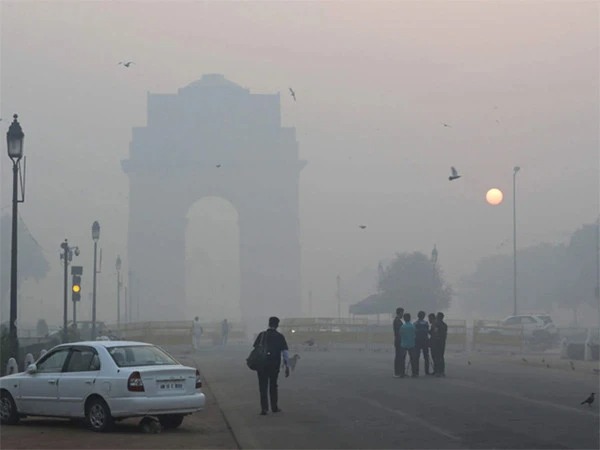
To substantiate his claim, Antonsen shared a screenshot from IQAir, a Swiss air quality monitoring firm, showing the Air Quality Index (AQI) in Delhi reaching a staggering 348 on Wednesday. According to global health standards, an AQI above 300 is classified as “Hazardous,” posing serious respiratory risks even to healthy individuals.
“In my opinion, I don’t think a badminton tournament should be held in such conditions,” Antonsen stated, emphasizing that the toxic atmosphere is fundamentally at odds with the spirit of sport and athlete health.
Despite the health-based justification, the Badminton World Federation (BWF) has reportedly taken a strict stance on the late withdrawal. The Danish player informed his followers that the governing body has imposed a $5,000 fine for his failure to participate in the Super 750 event.
The fine has drawn criticism from fans and environmental advocates, who argue that sports federations should prioritize athlete safety over commercial and scheduling commitments when faced with environmental crises.
This is not the first time international athletes have voiced concerns about New Delhi’s atmosphere. In recent years, cricketers, marathon runners, and tennis players have all reported difficulty breathing and physical distress while competing in the city.
Current Environmental Status of Delhi: AQI Level: 348 (Hazardous/Extremely Poor). Primary Pollutant: PM2.5 particles, which can penetrate deep into the lungs and bloodstream. Impact on Sport: Reduced visibility and decreased lung capacity for high-endurance athletes.
Antonsen’s withdrawal is a significant blow to the prestige of the India Open. As a top-seeded player and a major draw for audiences, his absence, and the reason behind it, highlights a growing challenge for India. Unless air quality management improves, international sporting bodies may face increasing pressure from athletes to shift major tournaments to cities with safer environmental conditions.