Beyond Olympic Gold: Why Arshad Nadeem’s Asian Games disappointment highlights systemic failure
Below is Exclusive Opinion Article by Nawaz Gohar

Beyond Olympic Gold: Why Arshad Nadeem’s Asian Games disappointment highlights systemic failure
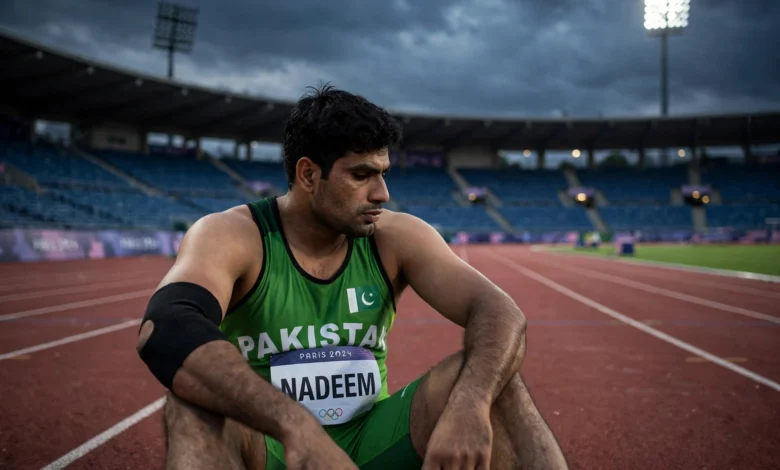
By Nawaz Gohar ; In a dramatic turn of events at the 2026 Asian Games, Pakistan’s Olympic hero Arshad Nadeem fell short of the podium in the men’s javelin throw final, finishing in fourth place.
Despite recording a season-best effort of 80.29 meters, the reigning Olympic champion struggled with consistency throughout the event, registering four fouls out of his six total attempts in rainy conditions at the Paloma Mizuho Sports Park. Fellow countryman Muhammad Yasir also represented Pakistan in the final, finishing ninth with a best mark of 73.50 meters.
Nadeem’s sequence opened with a modest 76.69-meter throw before hitting his peak mark of 80.29 meters on his third attempt. However, his final three attempts were all ruled fouls, effectively ending Pakistan’s hopes for an athletics medal. Sri Lanka’s Rumesh Pathirage claimed the gold medal, while competitors from India and Sri Lanka rounded out the top positions.
While public reaction has leaned heavily toward disappointment, treating this outcome as a personal failure of the athlete entirely misses the broader, more critical reality. It is not Arshad Nadeem’s fault; perhaps we simply expected too much from a single individual without providing the sustained ecosystem required to keep him at the summit.
The real questions must be directed at our national sports structure and administrative infrastructure. In leading sporting nations, the moment an athlete wins a major international title, state machinery and sports federations immediately pivot.
Focus shifts toward relentless refinement: developing new technical skills, upgrading sports science and rehab facilities, and meticulously planning for the next challenge. In contrast, our local system suffers from chronic complacency. We tend to celebrate past triumphs far too long, basking in historic glory while leaving the athlete’s ongoing development, training regimens, and competitive sharpness behind.
While championing our sports icons is essential, success must serve as the launching pad for an upgraded journey—not the final destination.
Arshad Nadeem’s historic Olympic triumph elevated him to national icon status, but sustaining dominance at the pinnacle of world athletics is exponentially harder than reaching it. Since that legendary Olympic performance, his output has struggled to consistently match that world-class standard.
This trajectory demands urgent and honest introspection: Training Infrastructure: Has his preparation been backed by elite-level coaching, sport science, and modern facilities required to maintain peak physical condition?
Injury & Rehab Management: Have lingering fitness concerns and physical strain been properly managed by specialized medical support teams? Focus & Hunger: Has the flood of post-Olympic fame, institutional awards, and commercial attention subtly eroded the intense focus and elite discipline needed to stay ahead of international rivals?
Reaching the top of the world was a historic achievement; remaining there requires a sustainable, modern sports machine. Arshad Nadeem has already proven his extraordinary caliber to the world.
The urgent question now is whether the sports authorities in Pakistan can build the professional setup necessary to help him recapture his sharpest competitive edge.