
Musical chairs in PCB: Constant shuffles, no results, and zero accountability
By Nawaz Gohar ; As losses multiply, selection controversies deepen, and coaching staff are shuffled with routine regularity, a sharp question looms over Pakistan cricket: when performance fails to meet international standards, where does the ultimate responsibility lie?
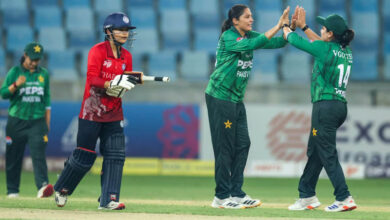
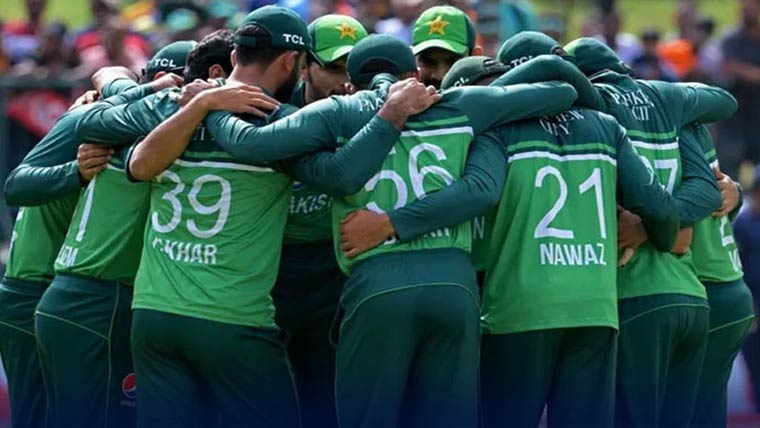
The national men’s team faces a harsh reality in England, having suffered heavy defeats in the opening two Test matches of the ongoing series. Simultaneously, the Pakistan women’s team reached a historic low during the Asia Cup in Dubai, collapsing to 55 all out against India—their lowest total in T20 International history.
Yet, despite dismal on-field returns across formats, key figures within the Pakistan Cricket Board (PCB) administration retain powerful positions across rotating portfolios.
Outlook India
Retained Power Despite Mounting Defeats ;
A clear illustration of this trend is former fast bowler Aaqib Javed. Over the past two years, Javed has rotated through multiple high-profile roles, acting as national selector, interim head coach, and currently serving as Director of High Performance.
To evaluate his tenure fairly, his record is not entirely devoid of success. During his time in decision-making roles, Pakistan secured notable Away One Day International (ODI) series victories in Australia and South Africa.
However, recent severe setbacks—including Pakistan’s early exit from the 2025 Champions Trophy, a disappointing campaign at the 2026 T20 World Cup, and decisive Test defeats in England—have brought selection criteria and squad management under intense scrutiny.
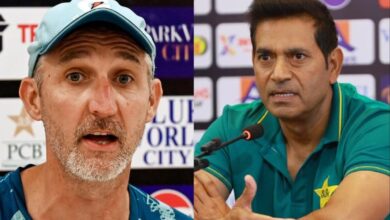
Former national coach Jason Gillespie publicly criticized Javed’s methods and the broader selection process. Despite mounting pressure, official reports confirm that Javed remains firmly in his post as Director of High Performance.
`
A similar governance pattern surrounds Wahab Riaz. After transitioning through roles as chief selector, selection committee member, and senior team manager for the men’s side, Riaz was reassigned to the women’s national team as coach and mentor. The PCB retained him in this capacity for both the Asia Cup and the Asian Games.
Yet performance outcomes for the women’s team remain troubling. Pakistan managed just a single victory during the 2026 T20 World Cup, suffered series losses in both ODIs and T20Is on their tour of Sri Lanka, and recently registered 55 all out against India.
The Governance Dilemma: “Musical Chairs” Without Standards ;
The core issue extends beyond individual appointments. It lies within a administrative culture where personnel who fail to deliver defined targets in one capacity are frequently reassigned to another strategic role, rather than being held accountable or removed from the system.
Critics often characterize this practice as a game of “administrative musical chairs.”
Fairness dictates that this critique should not automatically imply financial corruption or unlawful hiring. The pertinent, documented concern is structural: What uniform performance metrics and objective criteria govern hiring, lateral reassignments, promotions, and retention within the PCB?
At the apex of this administrative hierarchy stands PCB Chairman Mohsin Naqvi. Since assuming office in February 2024, Naqvi’s tenure has witnessed frequent reconstitutions of selection committees, rapid turnover among coaching staff, and continuous reshuffling of management positions among former cricketers. Naqvi himself publicly promised systemic reform and deep “surgery” to address the decline.
Yet, after two and a half years of continuous reshuffling, the primary question can no longer simply be who will serve as the next selector, coach, or director. The central question is who takes responsibility for the outcomes of these institutional decisions.
When the team achieves victory, board officials, coaches, and administrators readily claim credit. Operational fairness requires that failure be met with the same clear standard of accountability.
The Call for Top-Level Accountability ;
Ultimately, this question reaches the top tier of Pakistan’s governance structure. Prime Minister Shehbaz Sharif serves as the Patron-in-Chief of the PCB under its constitutional framework. In light of the persistent governance crisis in Pakistan cricket, changing playing XI lineups on the field is no longer a sufficient solution; administrative performance and structural accountability must also be evaluated.
The Pakistani public and cricket community are asking direct questions:
When roles and responsibilities are repeatedly reassigned while on-field results consistently decline, what standard of accountability is being applied?
If national cricket collapses, why fall back on blaming only the eleven players on the pitch?
Who will hold the Chairman, selectors, coaches, mentors, and directors accountable for their performance?