
When the Playing Fields Stayed Alive, Terrorism Began to Lose،
How Amir Haider Khan Hoti and Syed Aqil Shah Used Sports to Inspire Hope Among Khyber Pakhtunkhwa's Youth

When the Playing Fields Stayed Alive, Terrorism Began to Lose،
How Amir Haider Khan Hoti and Syed Aqil Shah Used Sports to Inspire Hope Among Khyber Pakhtunkhwa’s Youth
By Ghani ur Rahman ; There are moments in history that are remembered not only for political decisions but also for the courage, resilience, and wisdom shown during times of extraordinary hardship.
Khyber Pakhtunkhwa witnessed one such chapter when the province stood at the epicenter of Pakistan’s battle against terrorism. Markets, mosques, schools, government offices, sports venues, and public spaces were all under constant threat. Every sunrise brought hope, while every sunset often carried the heartbreaking news of another tragic incident.
Despite these dark and uncertain times, the people of Khyber Pakhtunkhwa displayed remarkable courage, patriotism, and resilience. They refused to surrender to fear. Police officers, security personnel, journalists,
teachers, doctors, political workers, athletes, and ordinary citizens all stood together on the front line, paying a heavy price in the fight against extremism.
During this challenging period, the province was governed by the Awami National Party (ANP), with Amir Haider Khan Hoti serving as Chief Minister. Terrorism did not spare political leaders either. Senior Minister Bashir Ahmad Bilour was assassinated in a suicide attack.
Mian Iftikhar Hussain lost his only son to terrorism, while Haroon Bilour and numerous other political figures and workers were also targeted. Districts including Peshawar, Charsadda, Swat, and Mardan continued to endure immense suffering.
Amid these extraordinary circumstances, the provincial leadership faced a challenge far greater than maintaining law and order. It also had to protect an entire generation from fear, hopelessness, and psychological despair. It was during this period that a strategy emerged which many in the sporting community still remember with appreciation.
Under the leadership of Chief Minister Amir Haider Khan Hoti and the guidance of then Provincial Sports Minister Syed Aqil Shah, sports were transformed from a recreational activity into a powerful instrument of social stability and youth development.
Rather than allowing terrorism to dominate the minds of young people, the government encouraged them to participate in healthy competition, teamwork, discipline, and constructive activities.
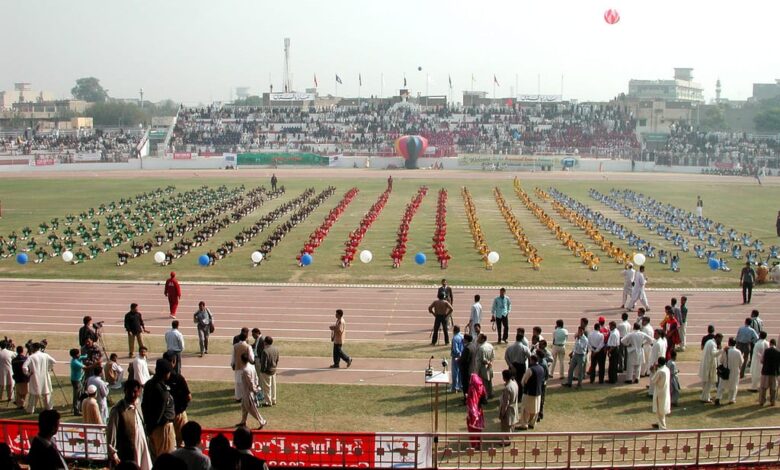
Sports competitions continued to be organized across Khyber Pakhtunkhwa, including Peshawar, Charsadda, Swabi, Mardan, Swat, Kalam, Naran, Kaghan, and many other districts. Young men and women were encouraged to fill stadiums and playing fields instead of living in constant fear of bomb blasts and violence.
Athletes were recognized, rewarded with cash prizes, and publicly appreciated for their achievements, giving them confidence and motivation during one of the province’s most difficult periods.
For many observers, sports during those years became much more than games. They represented hope, resilience, and normalcy. At a time when explosions and uncertainty dominated daily life,
sports grounds became symbols of courage and optimism. Every race, every football match, every martial arts competition, and every medal ceremony sent a powerful message that life would continue despite terrorism.
Many personalities associated with sports continue to describe that era as one of the most significant periods for the promotion of sports in Khyber Pakhtunkhwa.
They believe that maintaining sporting activities throughout those difficult years played an important role in keeping young people engaged in positive pursuits, strengthening their confidence, and preventing despair from taking root.
At the same time, history deserves to be viewed with fairness and balance. The fight against terrorism was a collective national effort. The Pakistan Armed Forces, police, security agencies, journalists, teachers, civil society, political parties, and countless ordinary citizens all made immense sacrifices in restoring peace.
Within that broader struggle, the continuation of sports provided an important social contribution by offering young people a constructive alternative during a period of fear and uncertainty.
Today, as Khyber Pakhtunkhwa continues its journey toward greater stability, this experience offers an important lesson for policymakers. Combating extremism requires more than security measures alone.
It also demands investment in education, sports, culture, libraries, and healthy public spaces where young people can develop confidence, purpose, and a sense of belonging.
History remembers leaders not only for the crises they faced but also for the vision they demonstrated while confronting them. If sports were effectively used during one of the darkest periods in the province’s history to keep young people engaged, motivated, and hopeful,
then that experience deserves thoughtful reflection. Nations are strengthened not only through security and governance but also through education, sports, culture, and opportunities that empower future generations.
The enduring lesson remains clear: terrorism seeks to rob young people of their future, while sports provide them with discipline, confidence, purpose, and hope. A nation that keeps its playing fields alive also keeps the minds and dreams of its youth alive.